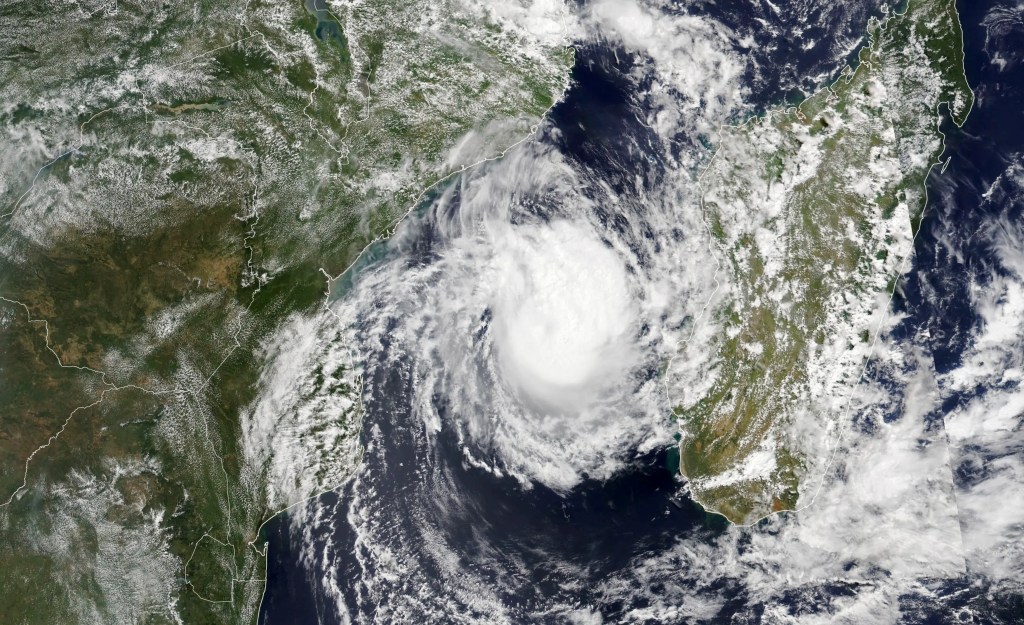
Most tropical cyclones last for days. Cyclone Freddy lasted for weeks.
The storm began near Australia in February before traveling thousands of miles across the Indian Ocean. It struck Madagascar, moved toward Mozambique, returned over the water, strengthened again, and eventually hit southeastern Africa another time.
Communities that had already been damaged by the first storm were hit again before they had even had time to recover.
Freddy would later be confirmed as the longest-lasting tropical cyclone ever recorded, spending 36 days at tropical-storm strength or higher.
Why Freddy Was So Unusual
Cyclones need warm ocean water for energy. Usually, storms weaken when they move over land or colder water.
Freddy repeatedly found conditions that allowed it to survive and strengthen again.
Its unusually long journey meant that communities across several countries faced heavy rainfall, flooding, damaged infrastructure, and displacement.
But what stood out to me was not only how unusual the storm was. It was where the worst consequences occurred.
The Unequal Cost of Climate Disasters
Countries such as Malawi, Mozambique, and Madagascar contribute far less to global greenhouse gas emissions than the world’s largest economies.
Yet when disasters strike, they often have fewer resources to prepare beforehand and rebuild afterward.
A destroyed road or school is difficult for any community to replace. For countries already facing poverty and limited infrastructure, recovering from a storm can take years and take money away from education, health care, and development.
That makes climate change more than an environmental issue. It is also an issue of fairness.
Who Pays for Recovery?
We often talk about reducing emissions when discussing climate change. That is important, but disasters like Cyclone Freddy raise another question: who should help pay for the damage that is already happening?
Countries that have contributed the most to climate change have more resources to protect themselves from its effects. Many countries that contributed far less do not have that same ability.
Cyclone Freddy eventually disappeared.
The damage it left behind did not.
As extreme weather becomes a larger part of our future, climate action cannot only be about preventing the next disaster. It also has to be about helping communities recover from the ones they are already facing.


Leave a Reply