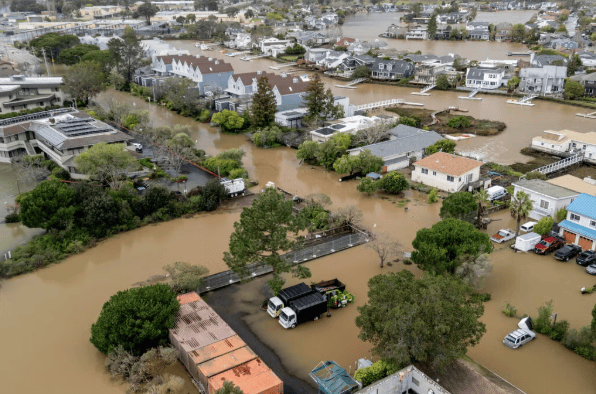
For years, California has been known for drought. Reservoirs have dried up, water restrictions have become normal, and wildfires have grown more destructive. But this winter, California faced the opposite problem: too much water, too quickly.
From late December into January, a series of atmospheric rivers brought huge amounts of rain and snow across the state. Roads flooded, hillsides collapsed, and thousands of people were forced to evacuate. After years of worrying about not having enough water, California suddenly had more than many communities could handle.
It seems contradictory. How can a place struggle with drought and flooding at the same time? But climate change is making both extremes more difficult to manage.
What Is an Atmospheric River?
Atmospheric rivers are long, narrow areas in the atmosphere that carry large amounts of water vapor. When they reach land, that moisture can fall as heavy rain or snow.
California depends on these storms for much of its water supply. The problem comes when several arrive close together.
Nine atmospheric rivers hit California between late December and mid-January, causing widespread flooding, landslides, power outages, and at least 21 deaths.
After years of drought, the ground in some areas could not absorb the water quickly enough. Instead, rain ran across roads and communities, while steep hillsides became vulnerable to mudslides.
Too Little Water, Then Too Much
One of the strangest parts of climate change is that it does not simply mean everywhere becomes hotter and drier.
A warmer atmosphere can hold more moisture. That can contribute to heavier rainfall when storms do occur. At the same time, higher temperatures can worsen drought by drying soil and increasing evaporation.
This means California can experience years without enough water and then suddenly receive enormous amounts at once.
Neither extreme is easy to manage.
Preparing for Both
California’s floods show why climate preparation cannot focus on only one type of disaster.
The state needs to conserve water during droughts, but it also needs infrastructure capable of handling extreme rainfall when it arrives. That means improving flood-control systems, protecting communities in vulnerable areas, and finding better ways to capture some stormwater instead of allowing it to flow immediately into the ocean.
Climate change is making weather less predictable. Preparing for the future means recognizing that drought and flooding are not necessarily opposites anymore.
Sometimes, they are two sides of the same climate problem.


Leave a Reply