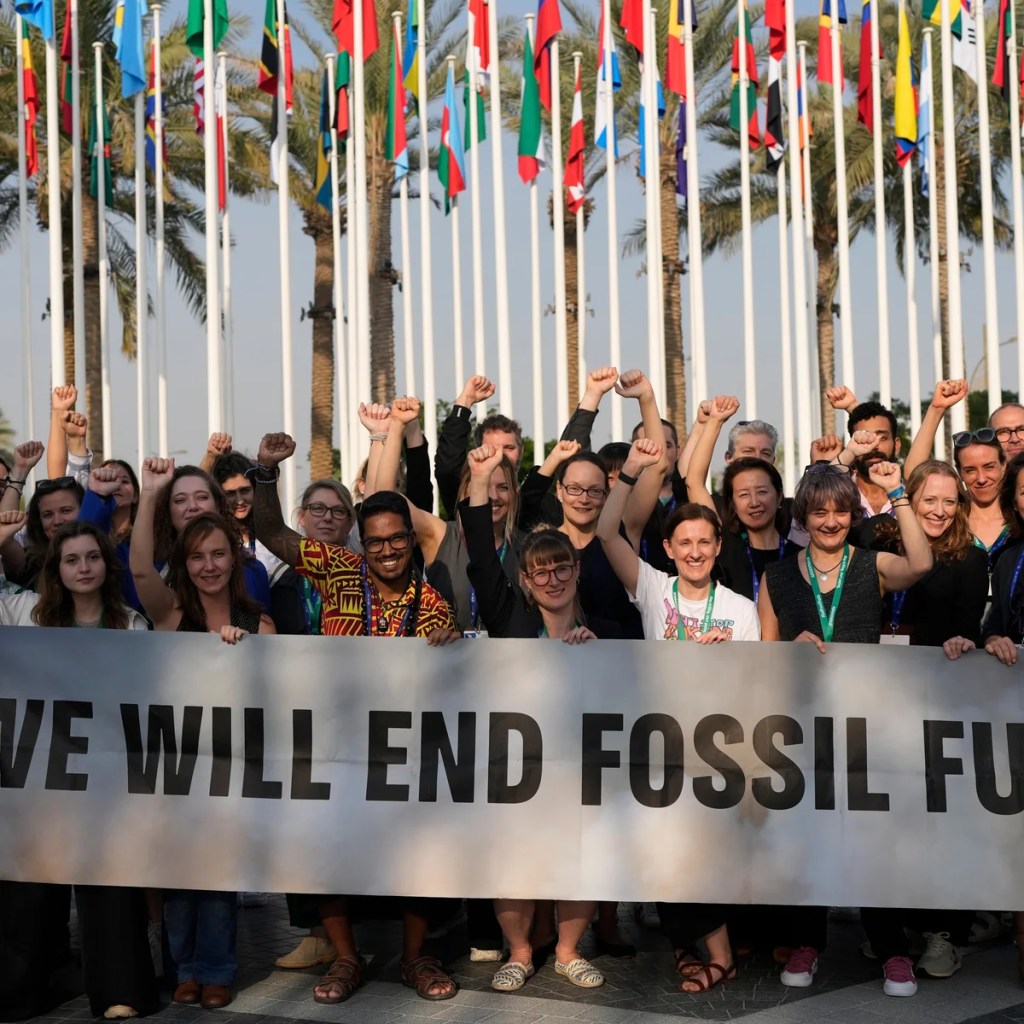
Every year, world leaders gather at the United Nations climate summit and make promises about the future.
This year, something happened that had never happened before.
At COP28 in Dubai, nearly 200 countries agreed to language calling for a transition away from fossil fuels in energy systems. Considering that coal, oil, and natural gas are the main drivers of climate change, it might seem strange that it took almost three decades of climate summits to say this directly.
But agreeing on the words was the easy part.
Now countries have to decide what they actually mean.
Why the Agreement Matters
Fossil fuels power much of the world.
They are used in transportation, electricity, manufacturing, and nearly every part of the global economy. Moving away from them therefore requires much more than building a few solar farms.
Countries need new power grids, cleaner transportation, energy storage, and enormous amounts of investment.
COP28 also called for tripling renewable-energy capacity globally by 2030.
The direction is becoming clearer. The difficult question is how quickly countries are willing to move.
Promises Versus Policy
International climate agreements are not the same thing as domestic laws.
A government can sign an agreement in Dubai and still approve fossil-fuel projects at home. Countries can announce distant climate targets while delaying the policies needed to reach them.
That gap between promises and implementation is one of the biggest problems in climate policy.
COP28 matters because governments finally acknowledged something climate scientists have said for years: addressing climate change requires moving away from fossil fuels.
But acknowledging a problem does not solve it.
What Comes Next
I think climate summits are easy to dismiss because progress can feel incredibly slow.
Still, the words countries agree to matter because they establish what the world is supposed to be working toward.
For the first time, that direction explicitly includes transitioning away from fossil fuels.
Whether COP28 becomes an important turning point or another climate promise will depend on what governments do after everyone leaves Dubai.
The real climate negotiations are not only happening at COP.
They are happening every time a government decides what to build, what to fund, and what kind of energy future it is willing to choose.


Leave a Reply